LLM
Different sources and papers related how can LLM’s be helping monitoring.
Extended to VLm
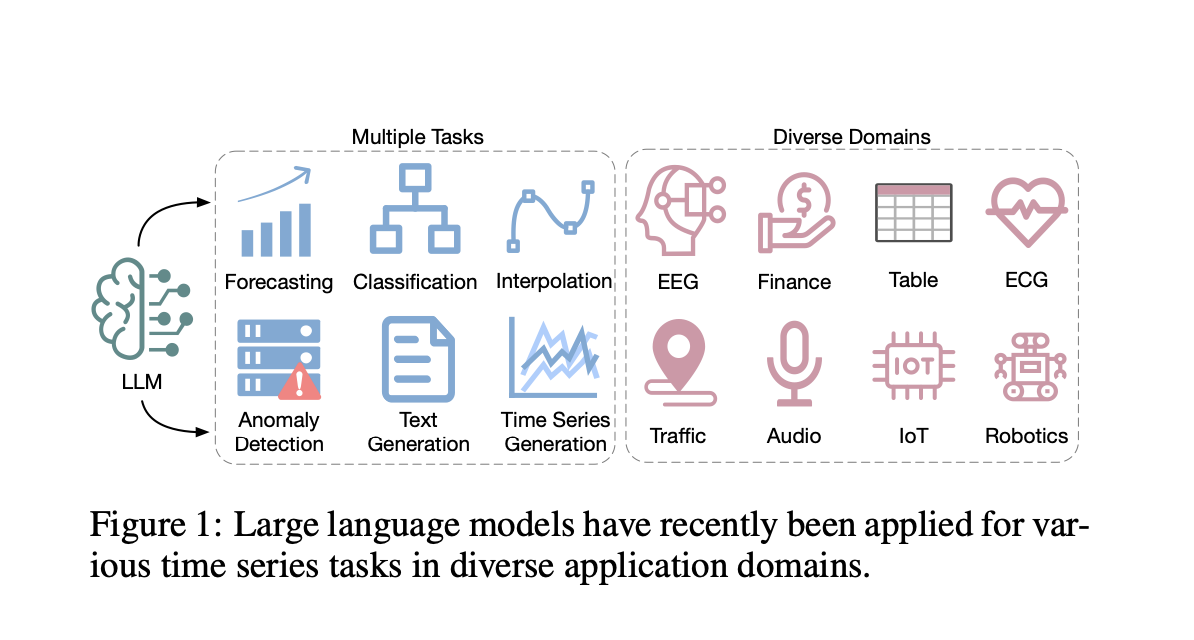
- Large Language Models for Time Series: A Survey https://arxiv.org/pdf/2402.01801
- IMU2CLIP: MULTIMODAL CONTRASTIVE LEARNING FOR IMU MOTION SENSORS FROM EGOCENTRIC VIDEOS AND TEXT NARRATIONS https://arxiv.org/pdf/2210.14395
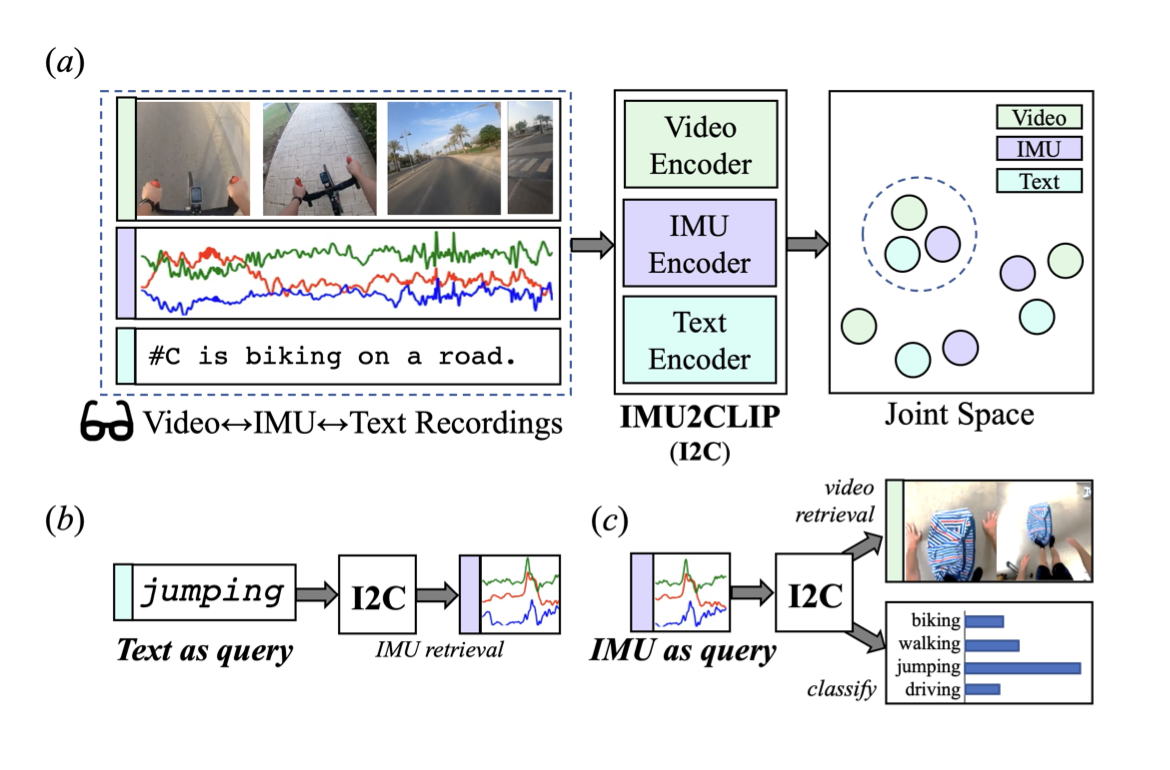
Abstract : We present IMU2CLIP, a novel pre-training approach to align Inertial Measurement Unit (IMU) motion sensor record- ings with video and text, by projecting them into the joint rep- resentation space of Contrastive Language-Image Pre-training (CLIP). The proposed approach allows IMU2CLIP to trans- late human motions (as measured by IMU sensors) into their corresponding textual descriptions and videos – while preserv- ing the transitivity across these modalities. We explore several new IMU-based applications that IMU2CLIP enables, such as motion-based media retrieval and natural language reasoning tasks with motion data. In addition, we show that IMU2CLIP can significantly improve the downstream performance when fine-tuned for each appli- cation (e.g. activity recognition), demonstrating the universal usage of IMU2CLIP as a new pre-trained resource. Our code will be made publicly available.
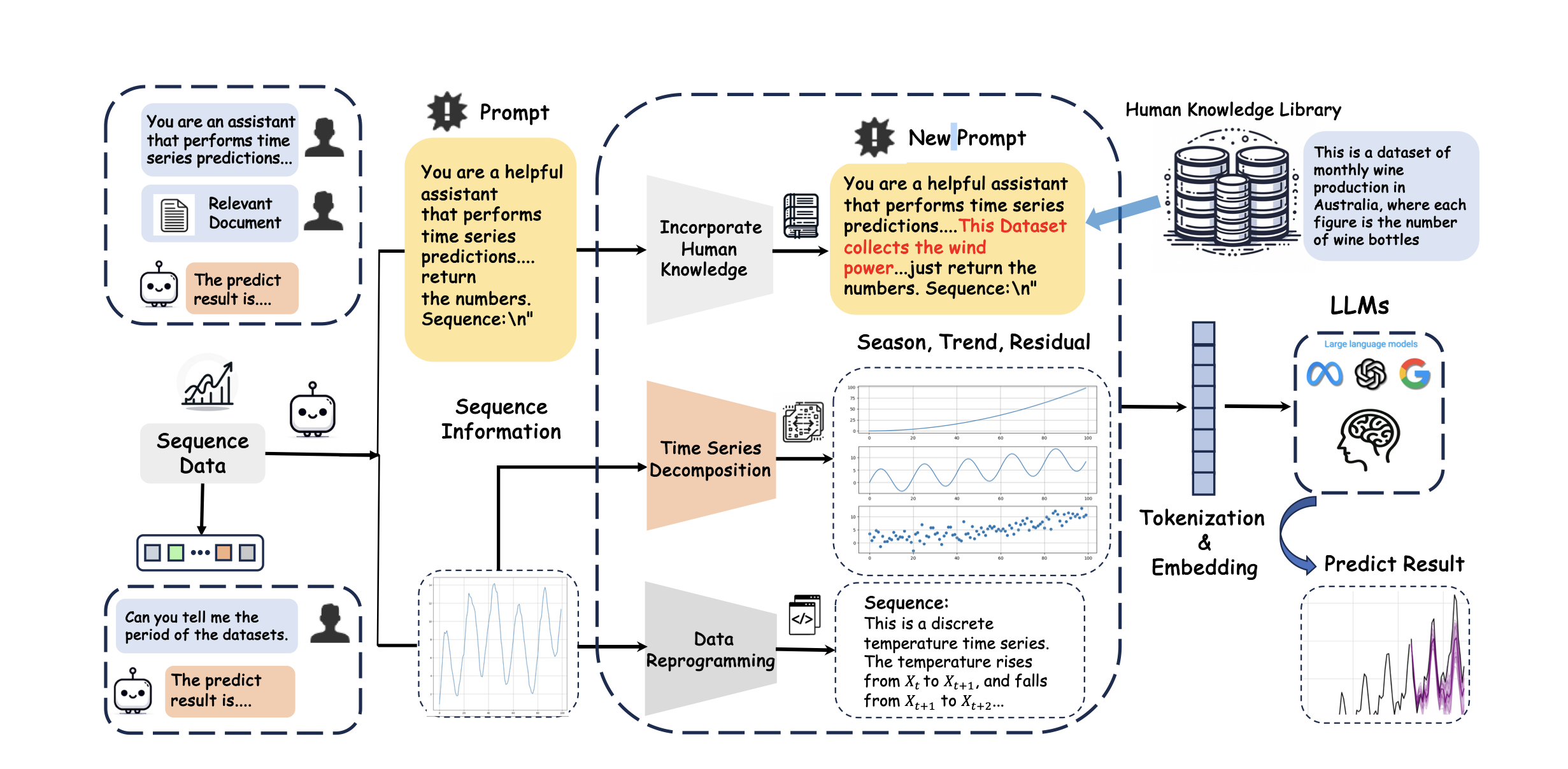
- Time Series Forecasting with LLMs: Understanding and Enhancing Model Capabilities https://arxiv.org/pdf/2402.10835
Abstract :
Large language models (LLMs) have been applied in many fields and have de- veloped rapidly in recent years. As a classic machine learning task, time series forecasting has recently been boosted by LLMs. Recent works treat large lan- guage models as zero-shot time series reasoners without further fine-tuning, which achieves remarkable performance. However, there are some unexplored research problems when applying LLMs for time series forecasting under the zero-shot setting. For instance, the LLMs’ preferences for the input time series are less un- derstood. In this paper, by comparing LLMs with traditional time series forecasting models, we observe many interesting properties of LLMs in the context of time series forecasting. First, our study shows that LLMs perform well in predicting time series with clear patterns and trends but face challenges with datasets lacking periodicity. This observation can be explained by the ability of LLMs to recognize the underlying period within datasets, which is supported by our experiments. In addition, the input strategy is investigated and it is found that incorporating external knowledge and adopting natural language paraphrases substantially improve the predictive performance of LLMs for time series. Overall, our study contributes insight into LLMs’ advantages and limitations in time series forecasting under different conditions.